

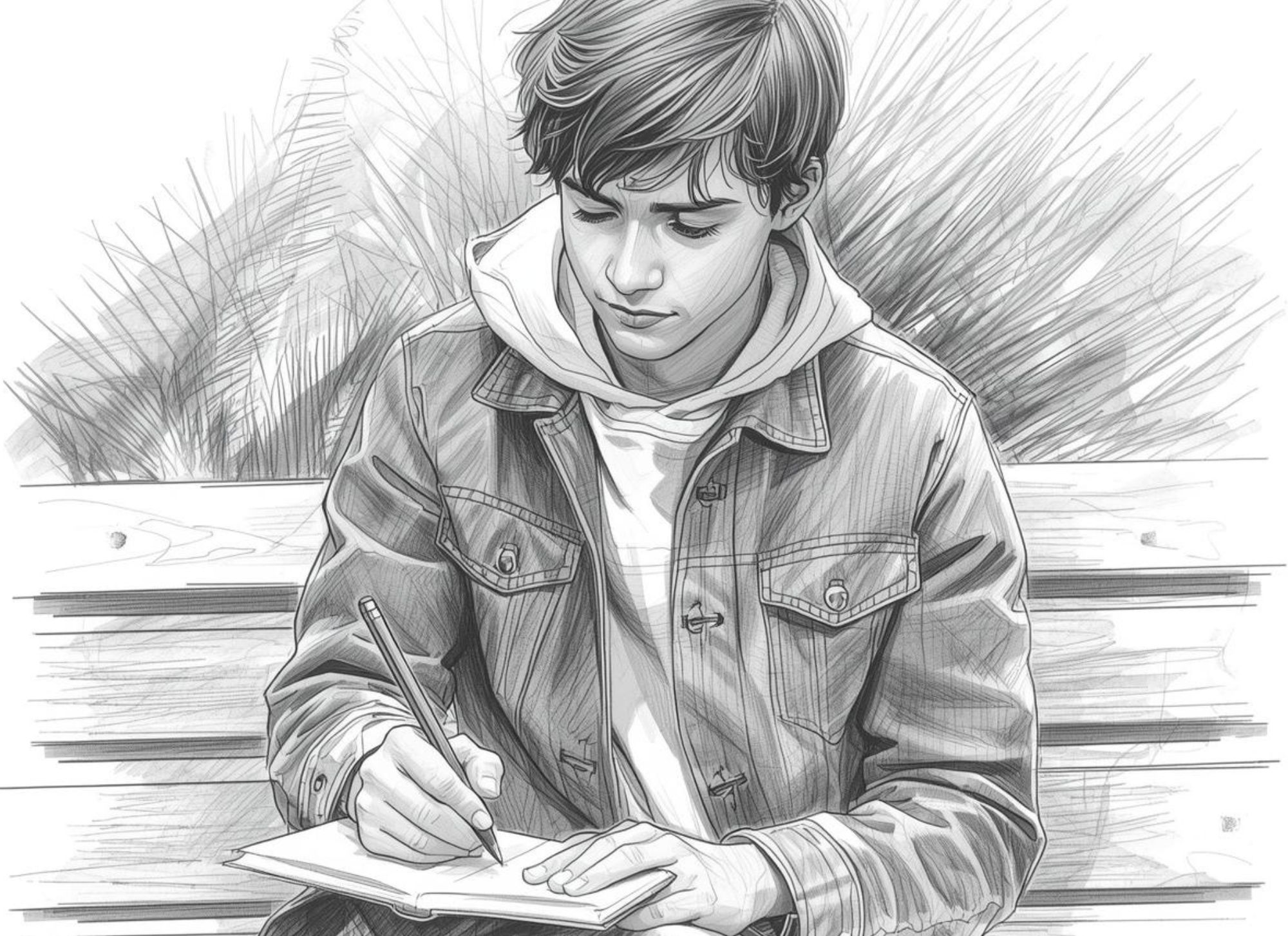
Discover essential advice for young writers and teens serious about writing. Learn how to develop your craft, handle rejection, find your voice, and build a writing career while still in school.
The Advantage You Have (That You Might Not Realize)
You’re seventeen, maybe younger, and you’ve decided you’re going to be a writer. Not “maybe someday” or “if things work out.” You’re writing now—seriously, consistently, pouring hours into stories that matter to you.
Your parents might not take it seriously. Your friends might not understand. Teachers might suggest you “have a backup plan.” Even published authors on the internet might warn you about how hard it is, how long it takes, how many people fail.
Here’s what none of them are telling you: You have an enormous advantage that adult writers would kill for.
You have time.
Not just years ahead of you (though you do). But time right now—time before mortgages, children, soul-crushing day jobs, and the accumulated weight of adult responsibilities. Time when your brain is still forming, still making creative connections, still hungry to learn.
According to a 2024 study of published authors, those who started writing seriously before age twenty published their first novel, on average, seven years earlier than those who started writing in their thirties. Not because they were more talented—because they had more practice.
The teenage writers I know who treat writing seriously now don’t just eventually get published. They build careers. They develop skills that take others decades to master. They become the writers everyone else wishes they’d been at that age.
But—and this is crucial—only if you approach it the right way.
This guide isn’t going to patronize you with “follow your dreams” platitudes. You’re serious about writing, so let’s talk seriously about what that means: the craft development, the mental game, the practical realities, and how to use these years wisely instead of wasting them.
The First Truth: You’re Probably Not Ready Yet (And That’s Perfect)
Let’s start with something uncomfortable but liberating.
Your First Novel Probably Won’t Get Published
I know. You’ve put six months or a year or even two years into this manuscript. It’s the best thing you’ve ever written. You’ve revised it multiple times. Beta readers said they loved it.
And it’s probably not ready for publication.
Not because you lack talent. Not because you’re too young. But because writing a publishable novel is an incredibly complex skill that almost no one masters on their first try.
The statistics:
- Most published authors wrote 2-5 complete novels before the one that got them published
- S.E. Hinton wrote multiple novels before The Outsiders (published when she was eighteen)
- Christopher Paolini wrote earlier manuscripts before Eragon (published when he was nineteen)
- Amie Kaufman and Jay Kristoff wrote unpublished novels before their breakthroughs in their twenties
Even the teenage success stories had practice novels.
Why This Is Actually Good News
Because you don’t have to get it perfect right now.
Your first novel is for learning:
- How to sustain a story for 80,000 words
- How to develop character arcs
- How to build and release tension
- How to revise extensively
- How to handle your own critical voice
Your second novel is for practicing what you learned.
Your third novel is where you start to put it together.
Maybe your fourth or fifth novel is the publishable one.
The mindset shift:
Don’t write for the writer you are now. Write for the writer you’re becoming.
Every word you write now is training. Every manuscript you complete is education. You’re not behind—you’re building a foundation that will support decades of career.
Adult writers spend their precious limited time learning these lessons. You’re learning them with time to spare.
The Second Truth: Your Age Is Irrelevant (Once You’re Good Enough)
Here’s something liberating and terrifying: Publishing doesn’t care how old you are.
There Is No Age Curve for Talent
When agents and editors read your manuscript, they don’t see your age. They see:
- The quality of your prose
- The depth of your characters
- The originality of your voice
- The marketability of your story
You’re not competing against other teenagers. You’re competing against everyone.
This means:
“Good for your age” doesn’t exist in publishing. Either the manuscript works or it doesn’t. Either readers will buy it or they won’t.
But this also means:
If you’re genuinely good enough, your age doesn’t matter. Agents don’t reject great manuscripts because the author is too young. Publishers don’t pass on bestsellers because the writer hasn’t hit thirty.
Recent Young Success Stories (And What They Tell Us)
S.A. Chakraborty – Started writing The City of Brass in her twenties; major three-book deal
Tomi Adeyemi – Published Children of Blood and Bone at twenty-four after years of developing craft
Nicola Yoon – Published Everything, Everything at thirty-nine, but had been writing seriously since college
Adam Silvera – Published More Happy Than Not at twenty-five after writing multiple unpublished manuscripts
What they have in common:
- Started writing young
- Wrote multiple manuscripts
- Developed craft over years
- Treated writing professionally from the start
None of them published their first attempt. All of them used their young years to practice.
The Craft Development Timeline (What to Focus on When)
Different stages of young writing require different focuses.
Ages 13-15: Permission to Write Badly
Primary goal: Finish things
At this age, your job is to:
- Write complete stories (even if they’re messy)
- Experiment wildly
- Read voraciously
- Learn that writing is work, not just inspiration
Don’t worry about:
- Publication
- Whether it’s “good enough”
- Comparing yourself to published authors
Do worry about:
- Actually finishing what you start
- Reading widely in your genre
- Writing regularly (even 15 minutes daily)
Recommended focus:
- Short stories (learn story structure quickly)
- Fan fiction (practice without pressure)
- Journaling (develop voice)
- Reading craft books (start with basics)
Ages 16-18: Finding Your Voice
Primary goal: Develop distinctive voice and learn revision
At this age, your job is to:
- Write multiple complete novels
- Revise extensively
- Study craft deliberately
- Start sharing work for feedback
Don’t worry about:
- Querying agents (probably too early)
- Whether you’re “wasting time”
- Competing with adult writers
Do worry about:
- Quality of prose (sentence-level craft)
- Character depth (beyond stereotypes)
- Receiving and integrating feedback
- Building writing community
Recommended focus:
- Complete at least 2-3 novel drafts
- Join or form serious critique group
- Study published books in your genre
- Take online writing courses
Ages 19-22: Professional Development
Primary goal: Write at professional level
At this age, your job is to:
- Produce market-ready manuscripts
- Understand publishing industry
- Build author platform
- Consider querying agents
Don’t worry about:
- Not being published yet (most aren’t)
- Age-based comparisons
- Choosing writing over “practical” career (yet)
Do worry about:
- Professional-level craft
- Understanding market and genre
- Building industry knowledge
- Creating sustainable writing practice
Recommended focus:
- Write the most polished manuscript you can
- Study query letters and agent research
- Attend writing conferences
- Build relationships with other writers
Ages 23-25: Career Launch
Primary goal: Professional debut or continued development
At this age, your job is to:
- Query seriously (if manuscripts ready)
- Keep writing new projects
- Handle rejection professionally
- Build career foundation
Don’t worry about:
- “Running out of time” (you’re not)
- Comparing debut age to others
- Giving up day job immediately
Do worry about:
- Continuing to improve
- Building sustainable career practices
- Financial realities of writing career
- Long-term vision
The Mental Game: Protecting Your Creativity While Growing Up
Being a young writer means navigating challenges adult writers don’t face.
Challenge 1: The Legitimacy Battle
The problem: Adults don’t take teenage writers seriously
The reality:
- Parents: “Writing is a nice hobby, but what’s your real plan?”
- Teachers: “That’s sweet, but have you considered something practical?”
- Peers: “You want to be a writer? Like, for real?”
The response: Don’t waste energy arguing or justifying. Prove it through work, not words.
Strategies:
- Treat writing like the serious pursuit it is (schedule it, protect it)
- Let finished manuscripts speak for you
- Find mentors who understand (writing teachers, published authors, online communities)
- Build evidence (writing awards, publications in literary magazines, completed projects)
Remember: Every successful writer faced this. Stephen King’s wife rescued Carrie from the trash. J.K. Rowling was a broke single mom. Doubt is universal—it’s how you respond that matters.
Challenge 2: The Isolation Problem
The problem: Writing is solitary; teenage years are social
The reality: Writing requires alone time, but you also need:
- Friendships
- Social development
- Real-world experiences
- Emotional support
The danger: Using writing as escape from rather than expression of life
The balance:
- Write regularly, but not obsessively
- Maintain real-world relationships
- Draw writing material from lived experience
- Find writer friends (online or in-person)
Warning signs you’ve gone too far:
- Choosing writing over all social interaction
- Using characters as substitute for real relationships
- Avoiding life experiences because “need to write”
- Writing about life instead of living it
The fix: Writing should enhance your life, not replace it. Live first, write second.
Challenge 3: The Comparison Trap
The problem: Social media shows you teenage authors with book deals while you’re still working on first draft
The reality:
- Most teenage “success stories” wrote for years before breakthrough
- Social media shows highlights, not behind-the-scenes struggle
- Comparison kills creativity
The response: Focus on your own trajectory, not others’ timelines
Strategies:
- Limit social media exposure to publishing news
- Remember: everyone’s timeline is different
- Measure progress against your past self, not others
- Celebrate small victories (finished chapters, good feedback, craft improvements)
Mantra: “I’m not competing with them. I’m competing with yesterday’s version of me.”
Challenge 4: The Pressure to Have It All Figured Out
The problem: Adults expect you to know your “life plan”
The reality: You don’t have to choose between writing and everything else right now
Options:
Path 1: Writing as career goal
- Study creative writing or English in college
- Work writing-adjacent jobs (publishing, editing, teaching)
- Write seriously while building career
- Aim for traditional publication
Path 2: Writing as serious pursuit, stable career for income
- Study whatever interests you
- Build stable career that funds writing
- Write consistently on the side
- Publish when ready
Path 3: Hybrid approach
- Build multiple income streams (freelance writing, editing, teaching)
- Keep options open
- Adapt as opportunities arise
Truth: Most writers have day jobs even after publishing. Planning for financial stability isn’t betraying your art—it’s protecting your ability to create without desperation.
The Craft Essentials: What to Master Before Querying
When you’re ready to pursue publication, agents will evaluate you on these elements.
Essential 1: Prose Quality
What it means: Sentence-level writing that’s clear, compelling, and appropriate to voice
How to develop it:
- Read widely in your genre
- Study favorite authors’ sentence construction
- Revise extensively (first draft is never final)
- Read work aloud to catch awkward phrasing
Common young writer prose issues:
- Purple prose (over-writing to sound “literary”)
- Telling instead of showing
- Inconsistent voice
- Cliché phrases
Fix: Read voraciously. Imitate authors you admire until you find your own style.
Essential 2: Character Depth
What it means: Characters who feel like real people with complex motivations, not chess pieces serving plot
How to develop it:
- Give characters goals beyond plot needs
- Create internal conflicts (wanting two incompatible things)
- Develop specific details (not generic traits)
- Show character growth through choices
Common young writer character issues:
- Protagonists who are thinly veiled author self-inserts
- Characters who all sound the same
- Unrealistic teenage characters (even in YA)
- Lack of meaningful character arcs
Fix: Study character development in favorite books. Interview your characters. Give them contradictions.
Essential 3: Plot Architecture
What it means: Story structure that builds tension, pays off setups, and provides satisfying resolution
How to develop it:
- Study three-act structure (or alternative frameworks)
- Outline before or during writing
- Track character goals and obstacles
- Ensure every scene advances story
Common young writer plot issues:
- Meandering middles with no direction
- Convenient solutions (deus ex machina)
- Setups without payoffs
- Stakes that don’t escalate
Fix: Outline completed drafts retroactively to see structure. Study plot in published books.
Essential 4: Voice and Perspective
What it means: Distinctive narrative voice and consistent point of view
How to develop it:
- Write regularly to find natural voice
- Read poetry for language play
- Experiment with different POVs
- Trust your authentic perspective
Common young writer voice issues:
- Trying to sound “adult” or “literary”
- Imitating favorite authors too closely
- Inconsistent narrative distance
- Forced quirky voice
Fix: Write what feels natural. Voice emerges from honesty, not performance.
The Publication Path: When and How to Pursue Agents
The Timing Question: When Are You Ready?
You’re probably ready to query when:
- You’ve completed and revised 2+ full manuscripts
- Beta readers who aren’t family/friends praise the work
- You understand your genre and market
- You can handle rejection professionally
- The manuscript is the best you can currently make it
You’re probably NOT ready when:
- This is your first completed manuscript
- You haven’t revised extensively
- You don’t know your genre or comp titles
- You’re emotionally fragile about criticism
- You think “it just needs an agent/editor to fix it”
The Rejection Reality
Truth: You will be rejected. Repeatedly. By many agents.
Even manuscripts that eventually sell often receive 50+ rejections first.
Why young writers struggle with rejection:
- Less experience with professional setbacks
- More emotionally invested (writing feels like self)
- Easier to take personally
- Less perspective on career trajectory
How to handle rejection:
- Separate self-worth from manuscript worth
- Remember: rejection is about fit, not value
- Keep writing new projects (don’t obsess over one)
- Build support network of other writers
- Take breaks when rejection hurts too much
The timeline reality: Traditional publishing is slow. Query to offer can take months. Offer to publication can take 1-2 years. You need patience.
Alternative Paths: Self-Publishing and Hybrid Approaches
Self-publishing considerations:
Advantages:
- Control over process and timeline
- Higher royalty percentages
- No gatekeepers
- Direct reader connection
Disadvantages:
- No advance payment
- You handle all costs (editing, cover, marketing)
- Harder to reach readers
- Less industry validation
Recommendation for young writers:
- Learn traditional publishing first (free education via rejections)
- Build craft to professional level
- Consider self-publishing after several traditionally published books
- Don’t self-publish to avoid rejection—fix the manuscript instead
The Reader Development Path: What to Read and Why
Your reading list is as important as your writing practice.
Read Widely in Your Genre
If you write YA:
- Read current YA (published within last 3 years)
- Study bestsellers in your subgenre
- Understand market trends
If you write fantasy:
- Read classics (Tolkien, Le Guin, Jordan)
- Read contemporary (Sanderson, Jemisin, Novik)
- Read debuts (see what’s selling now)
Apply this principle to any genre: Know what’s already been done and what readers currently want.
Read Diversely
Beyond your genre:
- Literary fiction (for prose and character)
- Poetry (for language and imagery)
- Nonfiction (for structure and clarity)
- Different cultures and perspectives
Why this matters:
- Expands vocabulary and technique
- Prevents derivative work
- Builds empathy and perspective
- Creates unexpected influences
Read Craft Books
Essential craft books for young writers:
Story structure:
- Save the Cat! Writes a Novel by Jessica Brody
- The Anatomy of Story by John Truby
Character:
- The Emotional Craft of Fiction by Donald Maass
- Creating Character Arcs by K.M. Weiland
Prose:
- On Writing by Stephen King
- Several Short Sentences About Writing by Verlyn Klinkenborg
Voice:
- Steering the Craft by Ursula K. Le Guin
- The Art of Fiction by John Gardner
Read one craft book per quarter. Apply lessons to current work.
Building Your Writer Community (Even When You’re Young)
You need other writers. Here’s how to find them.
Online Communities
Where to look:
- Twitter/X writing community (#WritingCommunity, #amwriting)
- Discord servers for young writers
- NaNoWriMo Young Writers Program
- Wattpad and similar platforms (but focus on craft, not just posting)
- Reddit r/YAwriters, r/writing
What to seek:
- Critique partners near your skill level
- Mentors slightly ahead of you
- Community celebrating wins and supporting struggles
What to avoid:
- Drama and negativity
- Constant comparison
- Time-wasting over actual writing
In-Person Opportunities
While in school:
- Writing clubs or literary magazines
- Creative writing classes
- School or local writing contests
- Teen writing workshops or camps
Beyond school:
- Local NaNoWriMo chapters
- Library writing groups
- Community college classes
- Writing conferences (some have teen programs)
Finding Mentors
Where to look:
- English teachers who write
- Local published authors (many do school visits)
- Online mentorship programs
- Writing teachers and coaches
What to ask:
- “How did you develop your craft?”
- “What do you wish you’d known at my age?”
- “Would you read a chapter and give feedback?”
- “How did you handle rejection?”
What not to do:
- Ask strangers to read entire manuscripts
- Expect free extensive editing
- Demand guaranteed paths to publication
The Long Game: Building a Sustainable Writing Life
Creating Sustainable Habits
Daily writing practice:
- Even 15-30 minutes daily > irregular marathon sessions
- Build the habit before worrying about output
- Protect writing time from other obligations
The compound effect:
- 500 words daily = 182,500 words per year
- That’s 2-3 novels annually
- Over a decade: 20-30 completed manuscripts
Habit strategies:
- Same time daily (trains brain)
- Same location (creates association)
- Remove barriers (computer open, document ready)
- Track streaks (visual motivation)
Balancing Writing with Life
School/college:
- Writing doesn’t excuse poor grades
- Use assignments to practice craft when possible
- Writing degree not required for writing career
Social life:
- Maintain friendships
- Experience life (it’s research)
- Don’t isolate completely
Mental health:
- Writing can be therapy but isn’t replacement for therapy
- Take breaks when needed
- Protect joy in writing (don’t make it all pressure)
Physical health:
- Schedule breaks from screen time
- Exercise (helps creativity)
- Sleep enough (affects writing quality)
Financial Realities
Truth: Most writers don’t support themselves by writing alone
Career options that support writing:
- Teaching (flexible schedule, relevant work)
- Editing/publishing (industry connections)
- Library work (surrounded by books)
- Marketing/content (uses writing skills)
- Freelance writing (builds craft, income)
Financial planning:
- Start saving early
- Don’t quit day job until writing income is stable (years)
- Build multiple income streams
- Understand royalties and advances
FAQ: Questions Young Writers Actually Ask
Q: Should I major in creative writing?
A: It’s one path, not the only path. Benefits: dedicated writing time, craft instruction, community. Drawbacks: expensive, not required for career, may not improve marketable skills. Alternative: major in something marketable, minor in writing, or take workshops independently.
Q: How do I know if I’m good enough?
A: You’re good enough when strangers (not family/friends) consistently praise your work, when beta readers finish and want more, when agents request fulls. Until then, keep developing craft.
Q: Should I tell people I’m a writer?
A: If you write regularly and seriously, yes. Own it. But be prepared for skepticism and questions. Let finished work prove it.
Q: What if my parents don’t support my writing?
A: Focus on what you can control (writing, improving, finishing manuscripts). Prove through action. Consider their concerns seriously (financial stability matters). Build bridge: excel in school + write seriously.
Q: Is fanfiction “real” writing?
A: Yes. It’s practice in character, dialogue, plot. Many published authors started with fanfic. Benefits: built-in audience, immediate feedback, low pressure. Drawback: can’t be traditionally published. Use it to learn, then write original work.
Q: How do I handle criticism from adults who don’t take me seriously?
A: Let your work speak for you. Finish manuscripts. Enter contests. Submit to literary magazines. Build evidence that you’re serious. Eventually, completed books are their own argument.
Q: What if I’m not published by 18/21/25?
A: Most writers aren’t. Debut age is trending older (average mid-30s). You’re not behind. You’re building foundation. Keep writing.
Q: Should I self-publish my first novel?
A: Probably not. Your first novel is usually practice. Waiting allows you to improve craft before permanent publication. Exception: If you’ve written multiple novels, received professional feedback, and are making informed decision.
The Bottom Line: You’re Not Too Young, But You’re Also Not Done Growing
Here’s what I wish someone had told me at seventeen: Your age is both irrelevant and hugely important.
It’s irrelevant because talent and craft don’t care about birthdays. If you write a brilliant manuscript at sixteen, it will find publication. The work stands on its own.
But your age is also hugely important because you have something no adult writer can buy: time to make mistakes, to experiment, to develop craft without pressure, to build the foundation for a decades-long career.
The writers who started young and succeeded didn’t succeed because they were young. They succeeded because they used those years wisely—writing regularly, studying craft deliberately, building community, and treating their art seriously even when others didn’t.
You don’t need to be published by eighteen to have a writing career. You need to be developing craft now that will support publication whenever it comes.
So write. Write badly at first. Write in imitation until you find your voice. Write things that embarrass you later. Write things that surprise you now.
Every word is training. Every manuscript is education. Every rejection is information.
You’re not too young to be a serious writer. You’re exactly the right age to become the writer you’ll be in a decade.
Start now.
Your Action Step This Week
Choose one: Either finish a short story this week (even if it’s rough), or read one craft book chapter and apply one technique to your current work.