

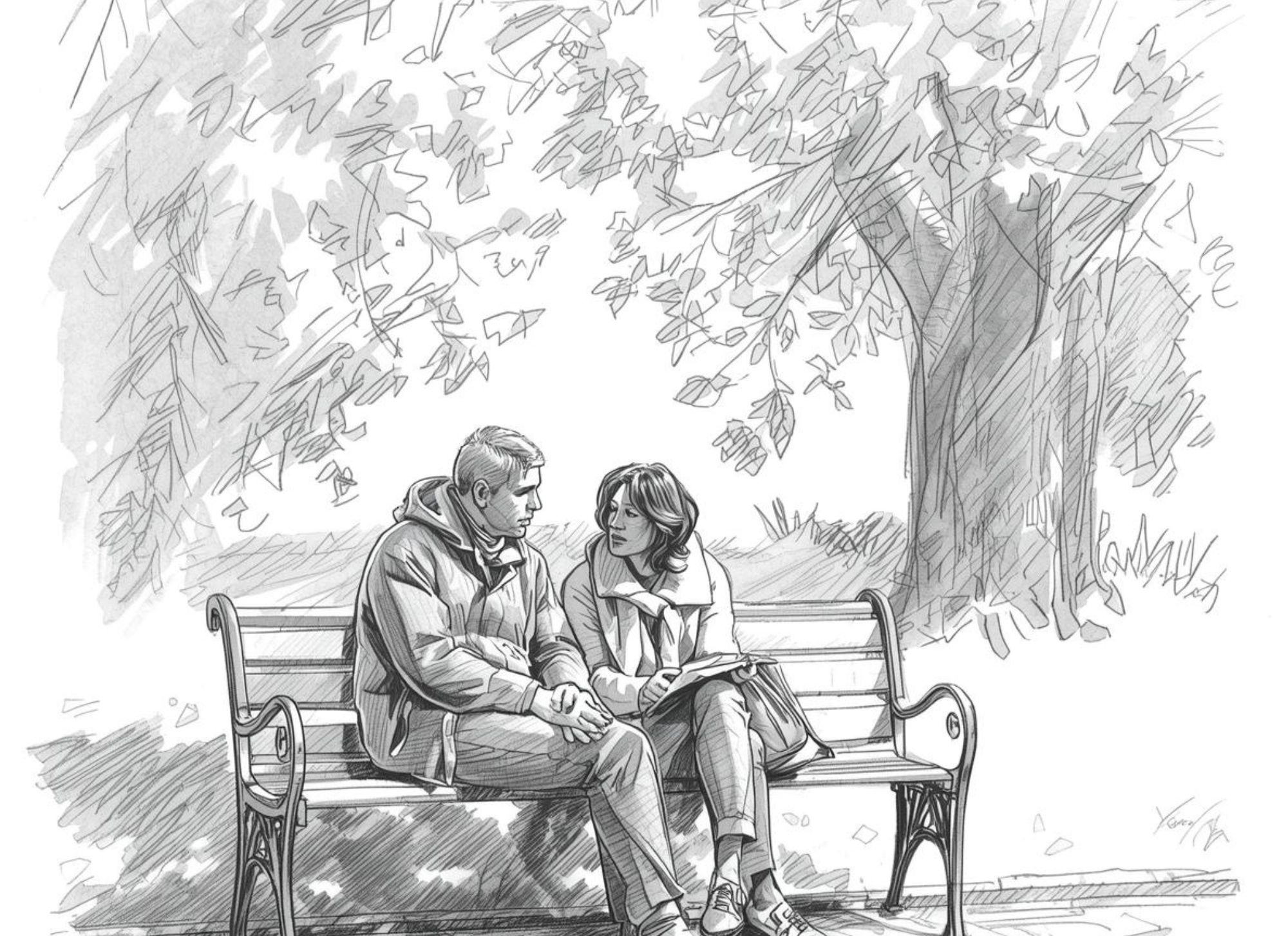
Master dialogue tags with this comprehensive guide. Learn proper punctuation, when to use “said” vs. alternatives, common mistakes to avoid, and formatting rules with examples from published novels.
The Invisible Craft Element That Makes or Breaks Your Novel
Here’s a test: Open any bestselling novel to a page with dialogue. Now count how many times the author uses the word “said.”
If you’re reading a professionally edited book, you’ll probably count a lot of “saids”—far more than you expected. Yet when you were reading the first time, you didn’t notice the repetition at all.
That’s the paradox of dialogue tags: when they work correctly, they’re functionally invisible. When they don’t, they stick out like a clown at a funeral, yanking readers out of your story with every appearance.
According to manuscript feedback data from 2024, dialogue tag problems appear in approximately 73% of unpublished manuscripts that agents reject. Not plot issues. Not character problems. The simple mechanical task of attributing speech to speakers.
The frustrating part? Dialogue tags follow clear, learnable rules. Yet somehow, a surprising number of writers—even those who’ve mastered complex narrative techniques—stumble over this fundamental element.
This guide will eliminate that confusion. You’ll learn exactly how dialogue tags work, when to use them, how to punctuate them correctly, and most importantly, how to make them disappear so readers focus on what your characters are actually saying.
What Are Dialogue Tags? (And What They’re NOT)
Let’s establish the foundation with clear definitions, because confusion here leads to most dialogue tag mistakes.
Dialogue tags (also called attribution tags or speaker tags): Words that identify who is speaking, typically structured as [character] + [speech verb]
Examples of dialogue tags:
- “I can’t do this,” Sarah said.
- “Why not?” Marcus asked.
- “Because,” she whispered, “I’m afraid.”
What dialogue tags are NOT:
Action beats: Separate sentences showing physical action
- “I can’t do this.” Sarah pressed her palms against the table.
Narrative description: Context or internal thought
- “I can’t do this.” The words came out shakier than she intended.
Dialogue itself: What the character actually says
This distinction matters because action beats and dialogue tags follow different punctuation rules, and mixing them up creates errors that mark your manuscript as amateur.
The Three Functions of Dialogue Tags
1. Speaker Identification: The primary job—telling readers who’s talking
2. Pacing Control: Well-placed tags create natural pauses, controlling reading rhythm
3. Clarity Maintenance: Preventing reader confusion during multi-person conversations
Notice what’s NOT on this list: conveying emotion, describing tone, adding drama, or showing character. Those jobs belong to your actual dialogue and action beats. Tags exist purely for functional clarity.
The Golden Rule: Why “Said” and “Asked” Are Your Best Friends
Let me state this clearly upfront because it’s the single most important dialogue tag principle:
Use “said” and “asked” for approximately 90% of your dialogue tags. These words are functionally invisible to readers.
I can hear the objections already: “But won’t that be repetitive? Boring? Won’t readers notice?”
The answer, backed by decades of reader studies and professional editing experience: No. Readers don’t notice “said” any more than they notice the word “the.”
Their eyes glide over these words without conscious registration because they’re purely functional. The moment you start varying tags with creative alternatives, you’re actually calling attention to something that should remain invisible.
The Science of Reading and Tag Invisibility
Eye-tracking studies on reading comprehension reveal that readers spend approximately 0.2 seconds on common dialogue tags like “said” compared to 0.8+ seconds on unusual tags like “ejaculated” or “expostulated.”
That extra processing time—multiplied across hundreds of dialogue tags in a novel—creates cumulative friction that slows reading and reduces immersion.
Compare these exchanges:
Version A (Standard Tags): “We need to talk,” Emma said. “About what?” James asked. “About us,” she said. “This isn’t working.” “I know,” he said quietly.
Version B (Creative Tags): “We need to talk,” Emma declared. “About what?” James inquired. “About us,” she asserted. “This isn’t working.” “I know,” he admitted softly.
Version B feels overwrought and performative. The tags compete with the dialogue for attention. Version A lets the actual conversation carry the emotional weight while tags fade into the background.
When to Use Alternative Tags (Rarely)
There are legitimate moments for alternative dialogue tags, but they should be the exception:
Physical necessity tags:
- whispered (actually quiet speech)
- shouted/yelled (actually loud speech)
- called (speaking from distance)
- muttered (barely audible speech)
Use these when the volume or physical act of speaking matters to the story.
Avoid:
- Emotional tags: grumbled, gushed, hissed (unless literally hissing sibilants), sighed, smiled, laughed
- Fancy synonyms: inquired, queried, remarked, articulated, opined, expounded, interjected
- Made-up tags: “I’m leaving,” she coffee-sipped (you can’t coffee-sip words)
The test: Can you literally perform the tag verb while speaking? You can whisper words. You can shout words. You cannot smile words or sigh words—those are actions accompanying speech, not speech verbs.
Mastering Dialogue Tag Punctuation (With Examples)
This section might feel tedious, but precise punctuation separates professional manuscripts from amateur ones. Agents and editors notice these errors immediately.
Basic Tag Punctuation Rules
Rule 1: Comma before closing quotation mark when tag follows
Correct:
- “I’m going to the store,” Lisa said.
- “Are you coming with me?” Lisa asked.
Incorrect:
- “I’m going to the store.” Lisa said. ❌
- “I’m going to the store” Lisa said. ❌
Rule 2: Lowercase the tag after dialogue (unless it’s a proper noun)
Correct:
- “I’m ready,” she said.
- “I’m ready,” Maria said.
Incorrect:
- “I’m ready,” She said. ❌
Rule 3: Questions and exclamations keep their punctuation
Correct:
- “Where are you going?” Sarah asked.
- “Stop right there!” the officer shouted.
Note: Still lowercase the tag even after question/exclamation marks.
Incorrect:
- “Where are you going,” Sarah asked. ❌ (needs question mark)
- “Stop right there!” The officer shouted. ❌ (lowercase “the”)
Tag-First Format
When the tag comes before dialogue, use a comma and capitalize the first word of dialogue:
Correct:
- She said, “I’m leaving.”
- Marcus asked, “Where are you going?”
Inverted tag order (less common but grammatically correct):
- Said she, “I’m leaving.”
- Asked Marcus, “Where are you going?”
This sounds archaic in modern fiction, so stick with “She said” order unless you’re writing historical or stylized prose.
Mid-Dialogue Tag Placement
Interrupting a single sentence:
When a tag interrupts one continuous sentence, use commas and resume with lowercase:
“I think,” Sarah said, “we should leave now.” “The problem,” he explained, “started last Tuesday.”
Between complete sentences:
When the tag falls between two separate sentences, use a period after the tag and capitalize the next sentence:
“I’m leaving.” Sarah grabbed her coat. “Don’t wait up.” “The meeting starts at noon,” Marcus said. “Don’t be late.”
Common mistake: Treating two sentences as one:
Incorrect: “I’m leaving,” Sarah said, “don’t wait up.” ❌
This fails because “Don’t wait up” is a complete sentence and should be capitalized.
Action Beats vs. Dialogue Tags (The Crucial Distinction)
This confusion causes more punctuation errors than anything else.
Dialogue Tag (uses comma): “I’m exhausted,” she said.
Action Beat (uses period): “I’m exhausted.” She collapsed onto the couch.
The difference: “Said” is a speech verb. “Collapsed” is not. You cannot “collapse” words. Therefore, it’s a separate action requiring a period.
More examples:
Correct:
- “I disagree.” He shook his head.
- “That’s wonderful!” She jumped up from her chair.
- “I’m not sure,” Lisa said, tapping her pen.
Incorrect:
- “I disagree,” he shook his head. ❌
- “That’s wonderful!” she jumped up. ❌
- “I’m not sure.” Lisa said, tapping her pen. ❌
Exception: When combining a dialogue tag with an action beat, you need a comma:
“I’m not sure,” Lisa said, tapping her pen.
Here “said” is the speech verb (dialogue tag), and “tapping” describes simultaneous action.
Trailing Off vs. Being Interrupted
Trailing off (use ellipsis): Character voluntarily stops speaking mid-thought.
“I was thinking maybe we could…” She shrugged. “It’s just that I…” He couldn’t finish.
Being interrupted (use em dash): Another character or event cuts them off mid-sentence.
“I need to tell you—” “Not now,” Marcus said.
Resuming after interruption: When the interrupted character continues later, start with em dash and lowercase (unless beginning new sentence):
“I was trying to say—” “I don’t want to hear it,” she said. “—that I’m sorry,” he finished.
Multiple Paragraph Dialogue
When one character speaks for multiple paragraphs:
Rule: Open each paragraph with quotation marks, but close only the final paragraph:
“Let me tell you a story about my grandmother. She grew up in a small village where everyone knew everyone’s secrets.
“One day, when she was just sixteen, a stranger arrived asking questions. No one trusted him, of course, because outsiders meant trouble.
“But my grandmother saw something different in him. She saw kindness where others saw threat.”
Notice: No closing quote after “secrets” or “trouble”—only after the character actually finishes speaking.
US vs. UK Quotation Mark Styles
United States: Primary dialogue uses double quotes; quotes-within-quotes use singles:
“Sarah told me, ‘The meeting is cancelled,’ so I came home,” James said.
United Kingdom: Primary dialogue uses single quotes; quotes-within-quotes use doubles:
‘Sarah told me, “The meeting is cancelled,” so I came home,’ James said.
Choose one based on your target market and be absolutely consistent throughout your manuscript.
The Five Most Common Dialogue Tag Mistakes (And How to Fix Them)
Mistake #1: The Emotional Tag Disaster
The error: Using dialogue tags to convey emotion or tone
Example: “I hate you,” she hissed angrily. “Please don’t go,” he begged desperately. “That’s ridiculous,” she laughed.
Why it fails:
- “Hissed” only works with sibilant sounds (words with s, sh, z sounds)
- You can’t laugh words (try it—you can laugh WHILE speaking, but not laugh the words themselves)
- Adverbs like “angrily” and “desperately” are redundant if dialogue is strong
Better alternatives:
Show emotion through dialogue itself and action beats: “I hate you.” She turned away, hands clenched. “Please don’t go.” His voice cracked. “That’s ridiculous.” She couldn’t help laughing.
Or let strong dialogue carry the emotion: “I hate you,” she said. (If the dialogue conveys hatred, you don’t need to tell us it’s said angrily)
Mistake #2: The Said-Book-Report Syndrome
The error: Avoiding “said” because you think it’s repetitive, resulting in absurd tag variety
Example: “Hello,” John greeted. “How are you?” Mary inquired. “Fine,” John responded. “That’s good,” Mary acknowledged. “Indeed,” John concurred.
Why it fails: The variation itself becomes distracting. Readers notice the author trying too hard.
The fix: Embrace “said” repetition:
“Hello,” John said. “How are you?” Mary asked. “Fine.” “That’s good.” “Indeed.”
Notice: You don’t even need tags for every line in rapid back-and-forth.
Mistake #3: The Action Beat Comma Splice
The error: Treating action beats as dialogue tags
Example: “I’m leaving,” she grabbed her coat. ❌ “Stop right there,” he blocked the door. ❌
Why it fails: “Grabbed” and “blocked” aren’t speech verbs. These need periods, not commas.
The fix: “I’m leaving.” She grabbed her coat. ✓ “Stop right there.” He blocked the door. ✓
Or combine with actual dialogue tag: “I’m leaving,” she said, grabbing her coat. ✓
Mistake #4: Tag-Less Confusion
The error: Eliminating tags entirely, forcing readers to count lines to track speakers
Example: “We need to talk.” “About what?” “You know what.” “I really don’t.” “The promotion.” “What about it?” “You should have told me you applied.” “Why would I tell you?”
After six exchanges, readers lose track of who’s speaking, especially if they glance away or read while distracted.
The fix: Include periodic tags even in rapid exchanges:
“We need to talk.” “About what?” “You know what.” “I really don’t,” James said. “The promotion.” “What about it?” His voice hardened. “You should have told me you applied,” Sarah said. “Why would I tell you?”
Mistake #5: The Fancy Tag Thesaurus Disaster
The error: Consulting a thesaurus for tag variations to avoid “said”
Example: “Let’s go,” she vocalized. “Where?” he queried. “Home,” she articulated. “Why?” he interrogated. “Because I opined so,” she enunciated.
Why it fails: These words call massive attention to themselves. They sound pretentious and break immersion.
The fix: “Let’s go,” she said. “Where?” “Home.” “Why?” he asked. “Because I said so.”
Advanced Dialogue Tag Techniques
Strategic Tag Placement for Pacing
Where you place tags affects reading rhythm:
Front-loaded tags (slower pace): Sarah said, “I know what you did.”
The reader processes the speaker before the content, creating slight suspense.
End-loaded tags (faster pace): “I know what you did,” Sarah said.
The dialogue hits first, creating immediacy.
Mid-sentence tags (emphasis control): “I know,” Sarah said, “what you did.”
The pause created by the tag emphasizes different parts of the sentence.
Use this strategically:
- Front-loaded: Revelations, threats, important announcements
- End-loaded: Arguments, rapid exchanges, action scenes
- Mid-sentence: Emphasis on specific words, creating dramatic pause
The No-Tag Technique (When Done Right)
You can eliminate tags in rapid exchanges between two characters, but establish a clear pattern:
Example from The Hate U Give by Angie Thomas:
“You good?” “Yeah.” “You sure?” “I said I’m good.”
The pattern is clear: alternating speakers, no tags needed. But notice this only works for two speakers in rapid exchange.
When to skip tags:
- Two-person dialogue with clear turn-taking
- Rapid-fire exchanges (under 10 words per line)
- After establishing speaker pattern with tags
- When action beats clearly indicate speaker
When tags are essential:
- Three or more speakers
- Long speeches (over two sentences)
- After interruptions or topic changes
- When speakers re-enter after absence
- Any moment of potential confusion
Genre-Specific Tag Considerations
Literary Fiction: More freedom with tag elimination; readers tolerate ambiguity; sometimes uses “he said” / “she said” exclusively without names for stylistic effect
Examples: Cormac McCarthy (The Road – minimal tags/quotes), Sally Rooney (very spare tags)
Commercial Fiction/Thrillers: Crystal-clear attribution; rapid pacing; predominantly “said/asked”; tags every 3-4 exchanges minimum
Examples: Lee Child, Gillian Flynn, Blake Crouch
Young Adult: Contemporary tags; “said/asked” dominant; occasional “whispered/shouted”; reflects teen speech patterns
Examples: Angie Thomas, Becky Albertalli, Adam Silvera
Historical Fiction: May use period-appropriate formality in tags; “said he” constructions acceptable in Victorian-set novels; otherwise standard
Examples: Hilary Mantel, Anthony Doerr
Romance: Emotional clarity paramount; strategic tag placement for tension; balance between tags and action beats
Examples: Emily Henry, Casey McQuiston, Christina Lauren
Dialogue Tag Checklist for Manuscript Revision
Use this checklist when revising dialogue:
Tag Selection
- [ ] 90%+ of tags are “said” or “asked”
- [ ] Alternative tags are limited to physical speech verbs (whispered, shouted, called, muttered)
- [ ] No emotional tags (hissed, sighed, laughed, smiled, gushed, grumbled)
- [ ] No thesaurus tags (opined, expounded, articulated, vocalized, enunciated)
Punctuation Accuracy
- [ ] Commas before closing quotes when tag follows
- [ ] Tags are lowercase (unless proper noun)
- [ ] Question marks and exclamation points preserved
- [ ] Action beats use periods, not commas
- [ ] Mid-sentence tags use comma + lowercase continuation
- [ ] Between-sentence tags use period + capitalization
Tag Frequency
- [ ] Rapid two-person exchanges can skip tags
- [ ] Tags appear every 3-4 lines maximum in multi-person dialogue
- [ ] Every speaker clearly identified
- [ ] No reader guesswork about who’s speaking
Consistency
- [ ] US or UK quotation style (not mixed)
- [ ] “Said Nathan” vs. “Nathan said” consistent throughout
- [ ] Character names consistent in tags (not switching between first/last names)
Adverb Audit
- [ ] Minimal adverbs after tags (preferably zero)
- [ ] Emotion conveyed through dialogue/action, not tag modifiers
- [ ] No redundant adverbs (“shouted loudly,” “whispered quietly”)
Practice Exercise: Tag Diagnosis and Correction
Flawed Example (Multiple Errors):
“I can’t believe this,” she exclaimed angrily. “What’s wrong” he queried with concern. “Everything!” She sighed heavily, “Just everything.” “Tell me,” He sat beside her.
Errors Present:
- “Exclaimed angrily” – redundant emotional tag + adverb
- Missing question mark after “wrong”
- “Queried with concern” – fancy tag + telling emotion
- Period instead of comma after “sighed heavily”
- Lowercase “she” after comma
- “Sighed” isn’t a speech verb (can’t sigh words)
- Capital “He” should be lowercase
Corrected Version:
“I can’t believe this,” she said. “What’s wrong?” he asked. “Everything!” She dropped her head into her hands. “Just everything.” “Tell me.” He sat beside her.
FAQ: Your Dialogue Tag Questions Answered
Q: Should I use “he/she said” or “said he/she”?
A: In modern fiction, “he said” is standard. “Said he” sounds archaic unless you’re writing historical fiction or deliberately stylized prose. Choose one and stay consistent.
Q: Can I use “John” and “he” interchangeably in tags?
A: Yes, but be strategic. Use the character’s name when reestablishing speaker identity after multiple lines, when clarity requires it, or when other characters share the same pronoun. Use pronouns for flow when the speaker is obvious.
Q: Is it okay to never use adverbs with dialogue tags?
A: Not only okay—recommended. If your dialogue requires an adverb to convey tone, the dialogue itself needs strengthening. Let the words and context carry emotion.
Q: Should I vary tag placement (beginning, middle, end) for variety?
A: Vary based on pacing and emphasis needs, not arbitrary variety. Each placement creates different effects. Use the one that serves your specific moment best.
Q: How many lines of dialogue can I go without tags?
A: In two-person rapid exchanges, up to 6-8 lines if the pattern is crystal clear. In multi-person scenes, never more than 3-4 lines without tag or clear speaker indication.
Q: Are there times when fancy tags like “retorted” or “interjected” work?
A: Extremely rarely. These might appear once per novel during a very specific moment where the exact manner of speech is crucial to the scene. Even then, “said” plus context usually works better.
Q: What about “replied” or “answered”?
A: These are less egregious than “expounded” but still unnecessary. “Said” or “asked” work fine. The conversation context already tells us someone is replying or answering.
Q: Should dialogue tags appear in every paragraph of a long speech?
A: No. Tag the opening, perhaps one mid-speech if it’s very long, and readers will remember who’s talking. Over-tagging a monologue becomes repetitive.
Real-World Examples from Published Novels
Let’s examine how successful authors handle dialogue tags:
Celeste Ng (Little Fires Everywhere): “What’s going on?” Mia asked. “Nothing,” Pearl said. “Just thinking.”
(Simple, clean, invisible tags)
Taylor Jenkins Reid (The Seven Husbands of Evelyn Hugo): “You want to know about my husbands,” Evelyn said. “I want to know everything.” “All right, then,” Evelyn said. “Let’s start at the beginning.”
(Mix of tags and tag-free lines; “said” exclusively)
Angie Thomas (The Hate U Give): “What happened?” Momma asks. “Nothing. I’m fine.” “Starr—” “I’m fine,” I say.
(Minimal tags in rapid exchange; uses them strategically for clarity)
Fredrik Backman (Anxious People): “I’m looking for an apartment,” the woman said. “What sort of apartment?” “One I can afford.” The real estate agent nodded. “That’s going to be tricky.”
(Tag establishes speaker, then eliminates tags when clear; returns when needed)
Notice: All these successful authors rely predominantly on “said” and “asked,” eliminate tags when clarity permits, and trust their dialogue to convey emotion without tag embellishment.
The Bottom Line: Make Your Tags Disappear
Here’s the ultimate truth about dialogue tags: The best dialogue tags are the ones readers never consciously notice.
Your job isn’t to showcase creative vocabulary or avoid repetition. Your job is to make attribution so smooth, so effortless, that readers remain fully immersed in your characters’ conversation without ever thinking about the mechanical apparatus making that conversation comprehensible.
This means:
- Embrace “said” and “asked” without guilt
- Punctuate with precision
- Use tags strategically, not constantly
- Let dialogue and action carry emotion, not tags
- Trust your readers to track speakers with minimal guidance
Master these principles, and your dialogue tags will do exactly what they should: disappear into the background while your characters’ voices shine through clearly and powerfully.
The mark of a professional writer isn’t fancy tag variation or complete tag elimination—it’s knowing exactly when tags are needed, choosing them wisely, and formatting them flawlessly so readers never stumble or lose their place in conversation.
That’s the craft. That’s the goal.
Now go make your tags invisible.
Take Action on Your Manuscript Today
Open your current work-in-progress to any dialogue scene. Run it through the dialogue tag checklist above. Identify your three most common errors, then search your entire manuscript for those patterns and correct them.